
No St. Joseph 72-Hour Feed
No official St. Joseph County Sheriff page lists releases over a rolling three-day period. The completed sweep covered the Sheriff landing page, Corrections division, Jail Information, Resources, Forms and Documents, site navigation, and common release-feed terms. It found no roster, archive, 72-hour selector, field set, image rule, update cycle, or web-retention period.
This is more than a missing filter. There is no base online roster from which to infer a three-day list. An inmate-funds account service does not show custody. Likewise, a county news item can describe one event but cannot stand in for the jail’s full release log.
Check St. Joseph Three-Day Releases
Build a person-specific date range. Include each calendar date that could hold the booking, order, transfer, or release event. The Sheriff contact page says the office can be called around the clock, though records work may follow administrative processing.
- Write down the full booked name, another identifier, and the three dates at issue.
- Call 269-467-9045 and ask if the person is held now. If not, ask whether the last event was release or transfer.
- Check 3B District Court for bond, misdemeanor, and early felony entries; check 45th Circuit after felony bindover.
- Use VINE for a covered custody event or an alert registered before release.
- Request the Sheriff’s booking and release record for the exact person and date range.
- Follow any named receiving agency through OTIS, BOP, ICE, another county, or the appropriate court.
The St. Joseph County 24-hour release check is better for a same-day question. Neither page claims that an official feed exists.
St. Joseph 72-Hour Record Fields
A three-day request should seek the smallest existing record that answers the question. Asking for one booking avoids a broad request for every person released. The fields below come from the county booking/release inventory, not from an online display.
| Requested field | Why it matters |
|---|---|
| Full booked name and aliases | Supports identity matching across court and custody systems. |
| Booking or jail number | Separates the relevant episode from earlier bookings. |
| Booking and release timestamps | Places the physical jail event inside the three-day span. |
| Release type or coded disposition | May identify bond, time served, order, placement, or transfer. |
| Releasing authority or order | Points to the court or agency record that supplies legal context. |
| Destination or receiving agency | Distinguishes community departure from continued confinement. |
| Case number and hold flags | Connects the event to the docket and any other custody claim. |
Ask for a code legend if a release type is abbreviated. A transfer code should never be paraphrased as “freed.” A bond entry may show physical release while a criminal case remains open. Court records explain the legal order; the Sheriff record supplies the physical exit time.
Note: A CLOSED court label is a case-management status and does not, by itself, prove the date someone left the jail.
St. Joseph Weekend Release Context
A wider period helps after a weekend because several events may occur between checks. Bond can be posted, a court may enter an order, a local sentence may expire, or a transport may leave the jail. Yet the court and jail systems answer different parts of the question. The docket shows authority and case action. The jail record documents the custody event.
Start every St. Joseph County criminal matter with 3B District Court. It handles misdemeanors through disposition and felony cases through preliminary stages. After bindover, a felony disposition belongs to 45th Circuit Court. The County Clerk’s Circuit Court division is the official record route for that court.
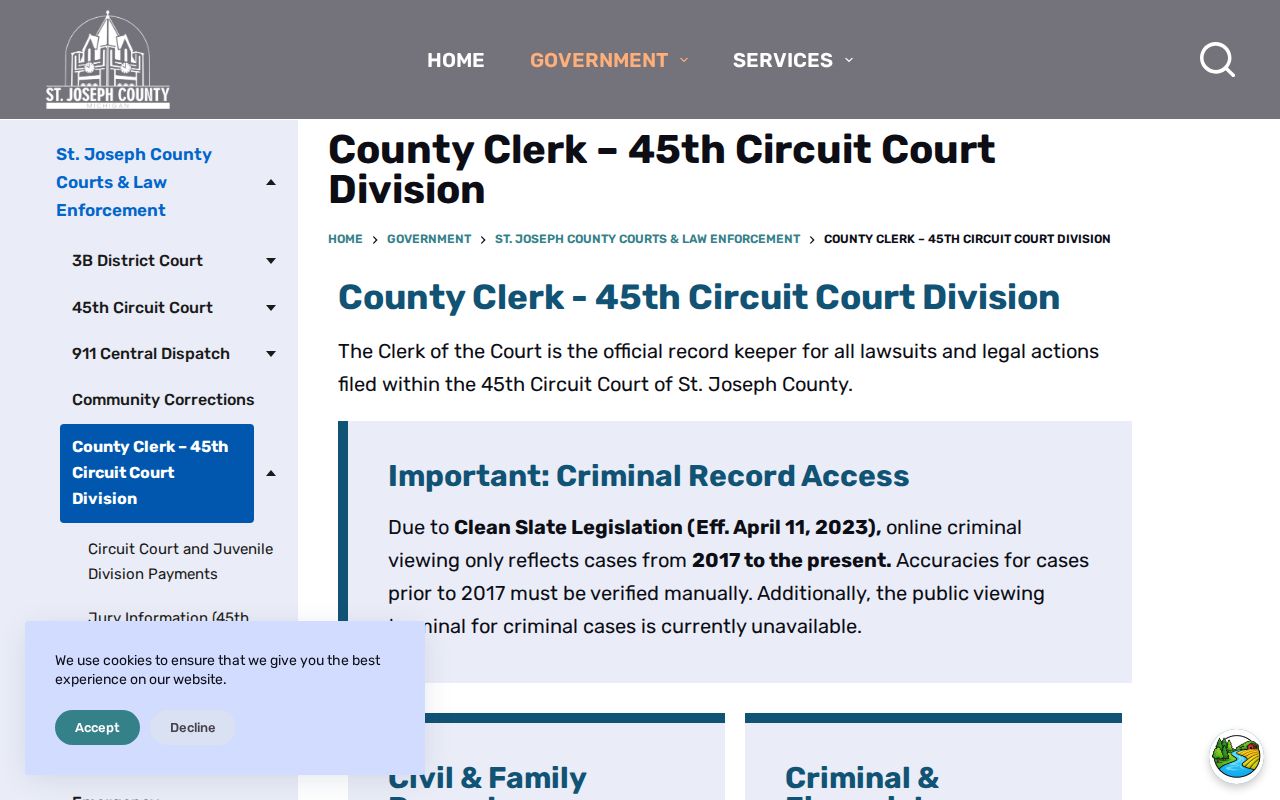
The clerk source is especially useful when a release or transfer followed a felony order during the three-day range.
Online court data has limits. St. Joseph County’s Circuit Court warns that its public criminal view focuses on records from 2017 forward and that older accuracy needs manual confirmation. A search miss is weak evidence, even when the date range is recent, because the underlying case may be older.
Request St. Joseph Three-Day Proof
The Sheriff’s Forms and Documents page links the department FOIA form. Describe the existing booking/release record, identify the person and approximate booking, and ask for electronic delivery. Request release date and time, release disposition, releasing authority, receiving agency, case number, and a booking photo only when it serves the record question.
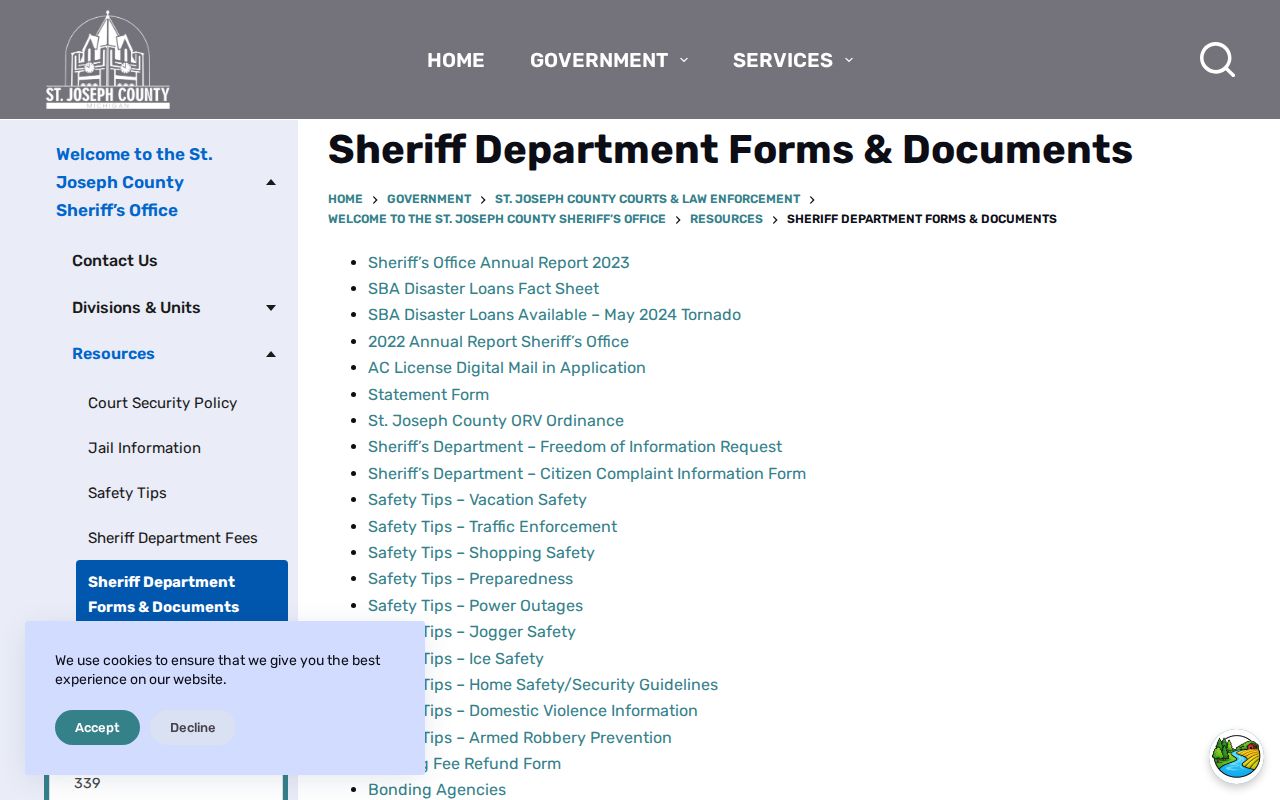
The official page supports a focused documentary request instead of a demand that the Sheriff create a new rolling list.
Michigan FOIA generally calls for a response within five business days, with one extension of no more than ten business days. A response may grant, deny, partly grant, or extend. Production may take longer if a lawful estimate, deposit, clarification, or review applies. Fees are specific to the request under MCL 15.234.
St. Joseph Release Records Outlast Web
The lack of a web list does not mean the booking file vanished after three days. Michigan’s GS11 general schedule describes inmate jackets that can include booking cards, mug shots, court papers, property forms, transfer documents, and inmate release forms. It generally assigns retention until release plus ten years.
That is the distinctive St. Joseph County answer to a missing 72-hour page: request the retained record. Agency-specific schedules may supersede the general schedule, so the rule is not a promise that every item exists. It does support asking the Sheriff to search the named booking instead of searching for a nonexistent feed.
Note: Web visibility is absent, while the underlying release record may remain available for years under the agency’s approved schedule.
St. Joseph Release Paths Differ
One final check must identify the custody system. A person released from St. Joseph County Jail on bond may remain subject to the local case. Someone sent to MDOC remains confined and should be searched in OTIS. A parole status means prison departure under MDOC control, while a discharged status means the displayed MDOC jurisdiction ended. Federal and immigration transfers use separate systems.
- County release
- Confirm with the Sheriff booking/release record and the local court order.
- State transfer
- Use OTIS and MDOC records; county-roster absence does not show community return.
- Federal transfer
- Use the federal docket, USMS route, or BOP locator as the case requires.
- Immigration transfer
- Use ICE only when the record supplies a real immigration hold or destination.
For one named person whose custody path is uncertain, use the St. Joseph County release verification map to select the last authority that held the person.
Build a St. Joseph Release Chronology
A three-day inquiry works best as a chronology, not a single status check. List each date in the range and place the known event beside it: booking, arraignment, bond action, order, transport, VINE notice, or direct agency confirmation. Then mark which office created each fact. This reveals gaps without assuming that a court entry and a physical jail release happened at the same time.
The jail release timestamp is the key operational event. A bond entry can precede processing. A court order can be entered before staff receive or complete it. A transfer can occur after a judgment commits the person to another agency. VINE may add a status clue, but it is not a certified jail log. When several events fall in the 72-hour range, preserve each source’s exact wording instead of choosing the earliest date and calling it the release.
| Chronology entry | Source to verify |
|---|---|
| Bond posted or release ordered | 3B District or 45th Circuit court record |
| Physical county jail departure | St. Joseph County Sheriff release record |
| Custody notification | Live VINE result or registered alert details |
| Transfer to another authority | County destination field and receiving-agency record |
A three-day timeline is especially useful after a gap in checking. It can show that the legal release basis arose on one day while the jail departure occurred on another, or that a county departure was followed by intake elsewhere. Neither pattern should be flattened into a generic weekend release.
Scope St. Joseph Three-Day Requests
The absence of a public rolling list does not require a request for every release in the county. A person-specific request is more precise. Give the full booked name, aliases if known, birth year or date of birth, approximate booking date, and the beginning and ending dates of the three-day span. Ask for the existing booking and release record, not a new report that ranks or summarizes people.
Request the fields that resolve the custody path: booking number, release date and time, release type, releasing authority, court and case number, hold or detainer flags, and destination or receiving agency. If a coded value appears, ask for the code legend. If an exemption applies, request the nonexempt portions that can be separated and the statutory basis for each redaction.
GS11’s general description makes the retained inmate jacket the practical fallback after the three-day period has passed. It can include booking cards, release forms, transfer papers, court records, property forms, and a mug shot. An agency-specific schedule can control instead, so the schedule supports a focused search but does not guarantee that every listed component exists for one person.
Note: The three-day span narrows the event date, while the booking number and identity fields narrow the person and custody episode.
Public Record Search
Sponsored Results